
A recent toxicology study in rodents, conducted in accordance with the United States Food and Drug Administration (FDA): Good Laboratory Practice (GLP) for Nonclinical Laboratory Studies regulation by one of the largest international animal facilities CRO highlights the importance of peer review process in nonclinical toxicology studies.
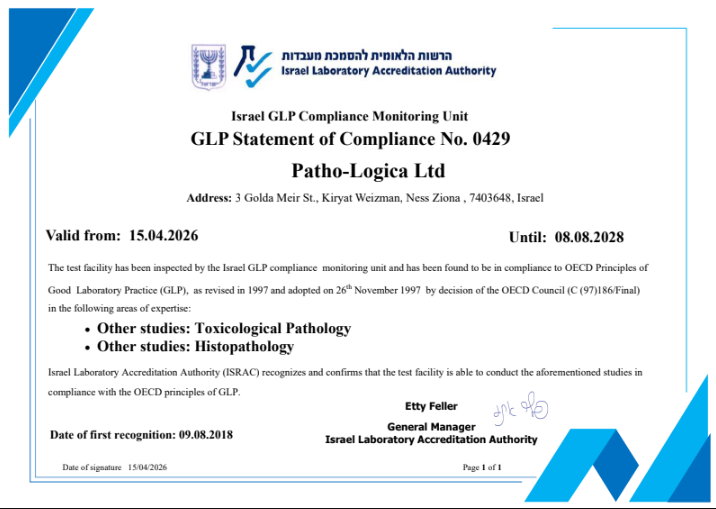
As a GLP accredited lab, we were approached to conduct a peer review on histopathology slides previously analyzed as part of the GLP tox study. The study director and the assigned anatomical pathologist concluded that skin lesions exhibited by many of the tested animals at all study groups are associated with the control excipients, suggesting a potential risk to a test item, which is a commercially available drug.
Upon receiving the skin slides of the tested animals, we conducted a thorough analysis. Our peer review findings concluded that the source of the lesions was likely to be iatrogenic, resulting from a reaction to a locally injected material rather than the test item. This prompted an internal investigation at the CRO, leading to identifying the potential source of skin findings.
This case underscores the effectiveness of peer review in accurately analyzing and interpreting lesions within the context of animal studies. For more information.